Recently I’ve been experimenting with plaster as a material to create work with. Below is my journey so far!
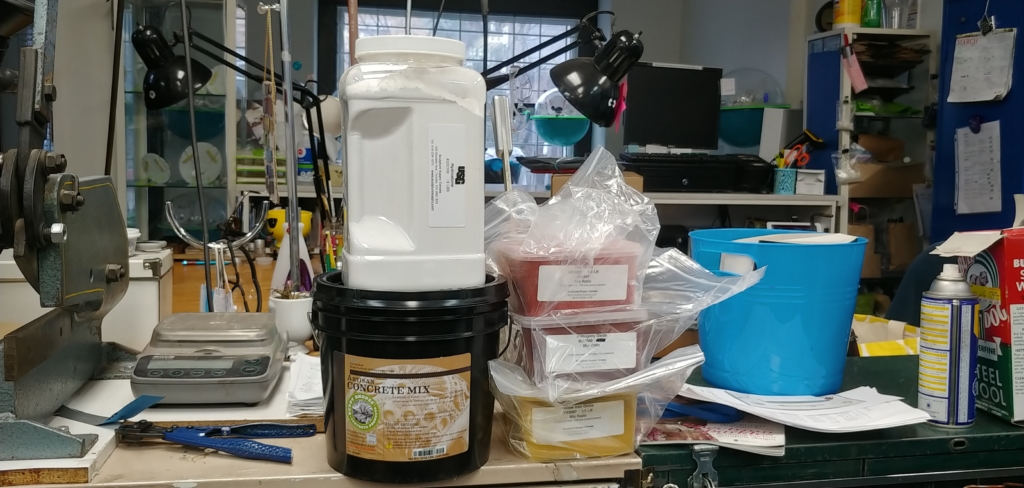
It arrives! Hydrostone plaster & powdered pigments!
I’d been planning on exploring this material in my work for a while, but with the recent slowdown due to COVID19 I figured this was the time.
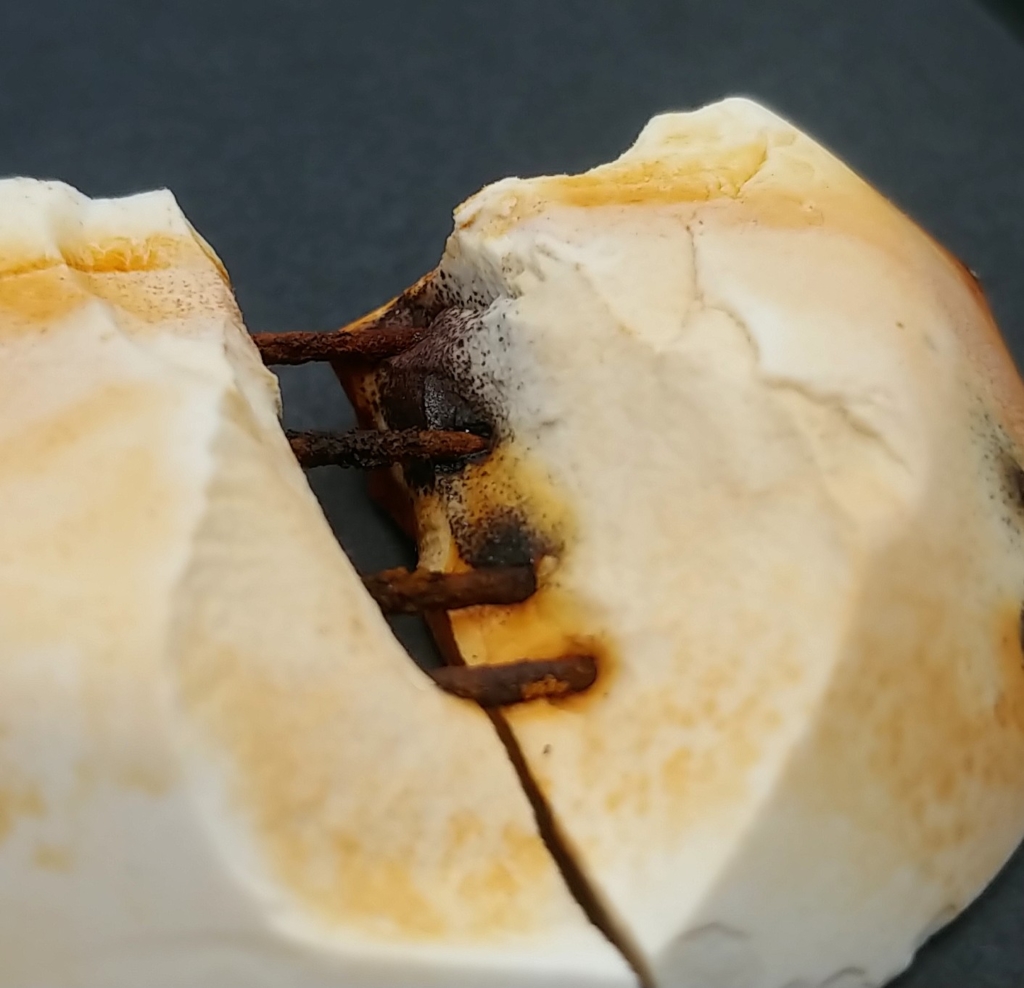
My first tests mostly focused on embedding steel into the plaster and then revealing it and letting nature do its work via rusting.
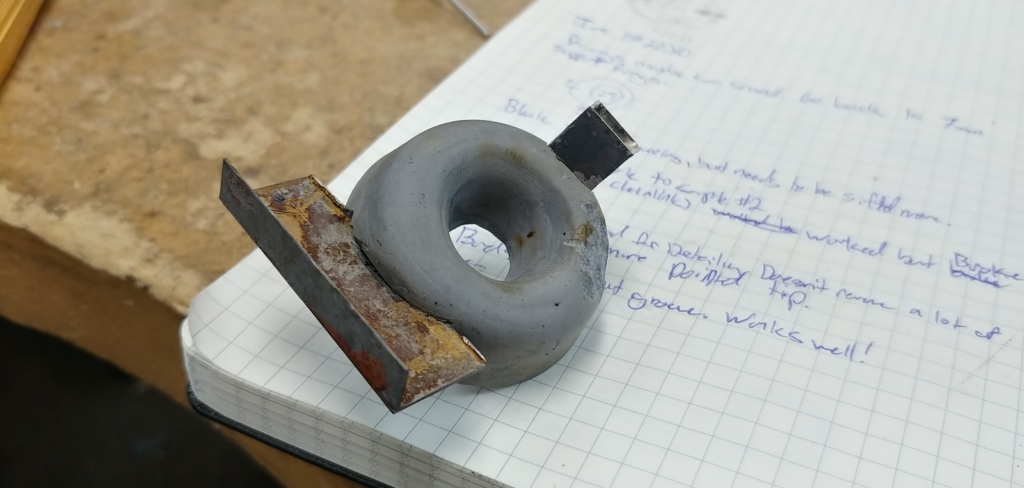
I’ve started keeping a log of my tests as I go! This will help in the future if I need to revisit the process.
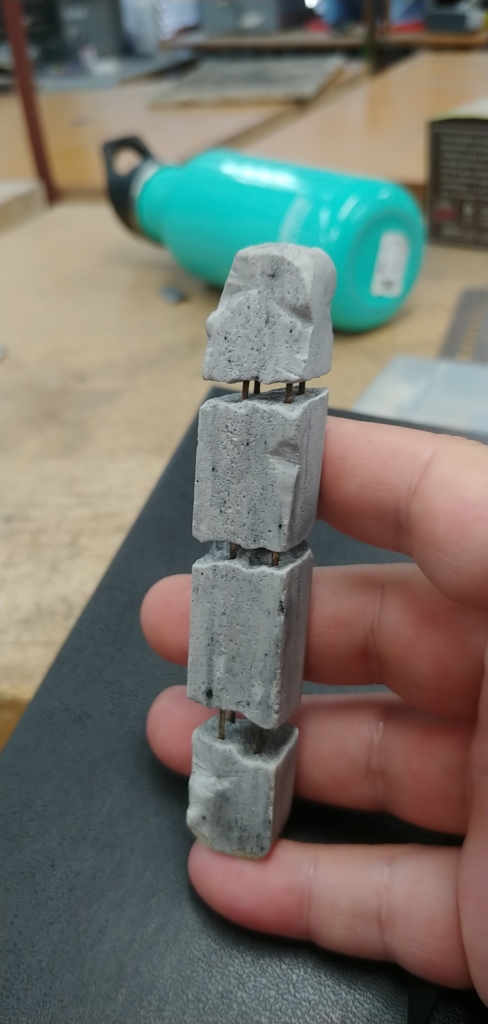
I’ve still got a lot of testing to do, but the most recent one above is looking promising! Excited to continue down this path and post more results here.
Jewellery is special. It allows us to keep it with us everywhere and anytime. Thus when purchasing jewellery, we always want to choose something not only beautiful but meaningful.
Do you know what’s your birthstone? Do you know the meaning behind your birthstone? Today I’m going to introduce all birthstones and their Metaphysical Properties.
Synthetic Stone/Colour: Synthetic Emerald or Spinel / Green
Emerald: believed to have life, they aid in growth and increase agricultural production. Viewing an emerald soothes and refreshes the eyes. Worn to relieve the pain of childbirth.
Ruby: a symbol of royalty, it may give the wearer the power of life and death. Gives health, wealth, wisdom and success in love. Prevents bleeding and heart failure.
No doubt about it, we all love jewelry! But where did it all begin?
As far as we know, the first jewelry we are aware of wasn’t even created by ‘human’ (homo sapien). Rather, by Neanderthal living in Europe. Recently, archaeologists excavated 100,000 year-old beads, made from Nassarius shells, are considered to be the oldest known jewelry.
Ancient beads made from seashells, appx 100,000 years old.
At approximately 100,000-year-old, these shells were discovered in Israel and Algeria. This discovery suggests that modern human forms of behavior, such as language, developed earlier than previously thought. The thought process involved in making jewelry involves communication, perhaps trade, perhaps a sense of status, recognition of beauty, and so on.
There is no way to know for sure why these beads were made, who wore them and why, but if these shells could talk, I would have a lot to ask them!
Interestingly enough, June has three gemstones associated with this month. There is an odd story associated with the birthstones that is not well known among the general public. While there have always been stones associated with seasons, zodiac signs, birth totems, religious figures etc… The “traditional” birthstones we see today are actually a 1912 marketing invention. Prior to 1912, birthstones varied depending on culture and religion. There was also the issue of some stones being represented in multiple months. Pearl, for example, is a birthstone of February and November. June’s birthstones were actually cat’s eye, turquoise and agate, mainly in relation to the zodiac signs of Gemini and Cancer within the month of June. In order to “standardize” the birthstones, the National Association of Jewelers, now called Jewelers of America met in Kansas, and officially adopted the list you see today. Over the years, other gemstones were added to raise sales of that particular stone.
The gemstones of June.
That’s right, there is no true reason for the monthly gemstones you see today other than to try and increase sales of that stone. Yes there is some relation to traditional stones mentioned in religious/spiritual text but that was not the focus. I find it interesting that some of the most expensive gems are birthstones over their less expensive counterparts or how some months have multiple stones if the previous birthstones were of lesser value, like June.
In the previous months I didn’t touch on this subject as most months had only one stone, with the exception of March that has bloodstone and aquamarine as its representative birthstones. Since most people are unfamiliar with bloodstone (a silicate relative of agate, onyx, jasper and chalcedony) I chose the latter. However, as June has three stones, moonstone, pearl and alexandrite. I chose my favourite stone of the three, Alexandrite.
Alexandrite is a variety of the mineral species chrysoberyl, with the chemical formula BeAl2O4 and while the name is similar to beryl, it is only the presence of beryllium that connects these two stones. The other variety you might be familiar with is the gemstone “cat’s eye” also known as cymophane. Etymologically, chrysoberyl is derived from the Greek words χρυσός chrysos and βήρυλλος beryllos, meaning “a gold-white spar”. However, the Greeks never knew of this stone.
Natural chrysoberyl displaying its hexagonal twinning.
0.98ct Cushion-Cut Greenish Yellow Chrysoberyl
Cat’s eye or cymophane, variety of chrysoberyl.
What is so fun and interesting about this gemstone/mineral is that we have a record of its discovery, and when it became a classified mineral. Chrysoberyl was discovered in 1789 and then described and classified as a new mineral in 1790 by the German geologist Abraham Gottlob Werner. This was the golden-yellow variety of chrysoberyl that many may have confused for a light coloured peridot. Alexandrite was discovered later, and originally was thought to be some unique variety of emerald. It was discovered in 1833 along the Tokovaya river of the Ural Mountains. It was described as a greenish crystal, with the strange ability to change color and appear red under candlelight. Then in 1834, the Finnish mineralogist Nils Gustaf Nordenskiöld had the mineral new gemstone officially classified as a variety of chrysoberyl and named the unique variety “alexandrite” in honour of the future Tsar Alexander II of Russia.
Alexandrite is identified as:
1) Orthorhombic Crystal System
2) Oxide Category
3) Simple Oxide Family
4) Mineral = Chrysoberyl – BeAl2O4
5) Variety = Alexandrite.
Now what makes alexandrite so appealing and expensive.
To date, alexandrite is among the most expensive gemstones per carat weight due to its rarity, durability and unparalleled beauty. Current prices of alexandrite place the stone from $30,000 per carat up to $60,000 per carat depending on the 4 C’s. For reference a carat is equal to 0.2g and since it’s exceedingly rare to find a cut alexandrite over 5 cts, the price jumps rapidly. Now an interesting side note, because alexandrite and cat’s eye are the same mineral you can have the two combined, which is extremely rare and pricey. With a Mohs hardness of 8.5, being only surpassed by sapphire, ruby, moissanite and diamond, this stone’s vitreous luster is quite resilient. While the stone is rare and durable, it’s beauty is what sets it apart from the other stones, mainly its ability to change colour.
Cat’s eye alexandrite.
Alexandrite has an interesting way of playing with physics and light. It possesses a characteristic phenomenon known as metamerism or more simply “colour change”, which is the ability to appear different colours with different light sources. Alexandrite was one of the first gemstones discovered to display this phenomenon so strongly. The stone appears emerald green in daylight and raspberry red in incandescent light. This colour change varies stone to stone and it’s all because of the presence of chromium in the mineral. The alexandrite variety of chrysoberyl results from the small scale replacement of aluminium by chromium ions in the crystal structure, BeAl2O4 as the valence electrons are similar. The presence of chromium results in an intense absorption of light over a narrow range of wavelengths in the yellow region (580 nm) of the visible light spectrum. Human vision is most sensitive to green light as it is perceived brighter and least sensitive to red light as it is perceived dimmer. When you combine the absorption of the yellow light, mixed with the colour sensitivity of the human eye, alexandrite appears greenish in daylight, as the full spectrum of visible light is present. However, in incandescent light it appears reddish as this light emits less of the green and blue spectrum and more red. Science to us, but it was magic and witchcraft to those of the past.
A great visual from explaining what causes the colour change within alexandrite.
As alexandrite is so wildly desired there are imitation and synthetic stones to watch out for. The main stone gemmologists see imitating alexandrite is a variety of synthetic colour change sapphire with vanadium to produce a colour change. When looking to see if this stone is alexandrite or sapphire, we look for curved striae within the crystal. These are curved lines created from the process of how they make synthetic sapphire (I will go into more detail about this process next month as we discuss rubies). These imitation stones will appear more blue than green in daylight as it is oddly hard for chemists to make emerald green sapphire. When viewed in incandescent light you will see more of a purple hue than red. There is also colour change cubic zirconia that can imitate alexandrite. Again the colour is not the same and you will see that price does not match the clarity and beauty of the stone. It is important to keep the price in mind because even true synthetic alexandrite costs more per carat than the two limitations mentioned above. Interestingly, some other natural colour change stones may be used to pass off as alexandrite. Zultanite, which is a lime-green to pink colour change stone, is such a gemstone. It’s a natural stone but because of the price difference it is sometimes used to pass off as a pale alexandrite.
Colour change sapphire used to imitate alexandrite.
Inclusions seen within synthetic alexandrite, in this case we see the aligned teardrop shape from the rotation of the pull method.
Some examples of natural inclusions seen within alexandrite.
Synthetic alexandrite is created through a process known as the “flux-melt” process, a method that involves adding fluxes to the melt to help with lower melting temperatures and cleaner crystallization. For alexandrite the process is a bit different, using what is known as the Czochralski pull method (say that 5 times fast). In a nutshell, synthetic alexandrite is grown from a melt by lowering a seed crystal into the melt to start the crystallization process and then slowly pulled up and rotated. As the seed crystal is pulled up the melt cools and crystallizes into a clean mineral cylinder. Since all minerals carry evidence of formation within them, this process will lead to unique liquid filled feather and blebs within the crystal. There may be teardrop shape inclusions or presence of platinum crystals within as platinum is used as a flux in this process. If you have a really good eye, you may be able to see swirls within the crystal as a result from the twisting motion of formation. Natural crystals don’t have any of these features within them, Instead natural alexandrite will feature other mineral inclusions and/or very geometric inclusions and fractures filled with only water and carbon dioxide. Even though this stone has a synthetic counterpart, its colour will still appear off compared to a natural alexandrite, science has yet to discover how to make an exact copy of these beautiful gems.
A diagram showing the Czochralski Pull method.
What the diagram looks like in real time. This is such a cool picture, well for me anyways.
Regardless, alexandrite is one of most beautiful stones I have seen. It will always be a regal stone to me and many others. Next month I dive into the reddest of the red, ruby.
Alexandrite front and center, exploding into diamond. This gorgeous piece is part of the Rubeus Imperial Alexandrite Collection, presented by Rubeus Milano. The necklace features an internal chain shoulder strap and is embellished with white diamonds; cabochon rubies, sapphires and emeralds and rubies, sapphires and emeralds hand-cut in the shape of leaves. There are also natural pearls all set in 18k white gold. It is definitely a standout. The retail price? $438,000.
Simple things can help you deal with this pandemic now that you are working from home. Nothing says more about your business than the way you present yourself. Working from home might mean that you can become lazy about how you dress.
Now that you are in front of your computer for most of the work day, talking with your co-workers and clients, your upper body becomes a very important feature. Appropriate dress is a must and a soft makeup is always a good complement.
A nice pair of earrings can soften your face and emphasize what you are saying.
This pair of earrings are short, not overpowering, easy to wear with any outfit, pretty even if you are wearing your hair up.
A necklace is always nice, even more if you are close to the screen. It gives you an elongated neck and helps to complement your face.
This necklace in silver, is a great addition to a blouse open neck or a nice top.
Last but not least a brooch is an excellent complement for any occasion at night and day not only at night. Brooches say a lot about a person. Madeleine Albright, Secretary of State in the U.S. from 1997 to 2001 under President Bill Clinton, has one of the most beautiful collections of brooches. She used them as a diplomatic tool. There were balloons, butterflies and flowers to signify optimism and, when diplomatic talks were going slowly, crabs and turtles to indicate frustration.
This is one of my brooches from a collection of butterflies, you can see at Jewel envy.
All the jewelry at Jewel Envy makes you look amazing.This and more is what we do!
Well, it’s a sunny Saturday. It’s not quite as warm as it has been, but it definitely feels like summer is coming, which lifts my heart! There’s been a lot happening in the world recently, and sometimes it’s difficult to know what to do, and it’s easy to feel like you need to find some way to contribute. This is a bit about one thing I’ve elected to participate in.
One of my colleagues sent me a link to something called the Hand Medal Project (all photos shown are from the gallery on the Hand Medal Project website).
Finished Medal example
What’s that you say? You can read some nice things about it at the link, but fit’s essentially about community recognising the amazing and vital efforts that health care workers have made to all of us during the Covid-19 outbreak.
The idea is that jewellers around the world volunteer to make little metal medals in the shape of a hand, with a little ribbon, which will then be distributed to health care workers.
There are a lot of things that appeal to me about the project. The hands are a tangible recognition from the community of contribution, as well as a memory of this period of time. I also like the idea that they will be given out to workers by their peers and own community. Of course, my secret hope is that so many people participate, and that we make soooooo many medals, that everyone who “should” get one, can have one. My personal aim is to try and devote a bit of time to them every time I’m in the studio.
It’s a longer term project-it’s not expected to wrap up until October, so still lots of opportunity to participate.
My hope is that you all staying healthy, listening to the government and healthcare experts, and following the guidance that they are recommending in this time, by being mindful of physical distancing from others and wearing face masks. Let’s all do our part to keep each other safe and healthy and keep from spreading infection. The more we do this, the sooner we will all be able to get back.
Enjoy your great Saturday, whatever you are up to!
Currently on the docket for today is finalizing details on our new outside banner. I am happy about the layout and excited to have images from almost all of the goldsmiths that work from Jewel Envy represented.
Keep an eye out for it if you are walking along Roncesvalles and be sure to drop in and say hello (at a safe distance and with a mask of course!)
This mini article is from our intern Siyu Hu from her last year at George Brown College. It is a look at one of her projects from her fifth semester of school!
Project- Make production earrings using “champlevé” technique
Enamelling gives me a lot of fun during the jewellery making process. I have an earring design which is using enamel technique. Enamelling needs to use a kiln. Jewel Envy has kiln for enamelling and other equipment to support the whole jewellery making process.
There are many kinds of enamel techniques. “Champlevé” is an enamelling technique in the decorative arts, or an object made by that process, in which troughs or cells are carved, etched, die struck, or cast into the surface of a metal object, and filled with vitreous enamel. The piece is then fired until the enamel fuses, and when cooled the surface of the object is polished. The un-carved portions of the original surface remain visible as a frame for the enamel designs. Let’s take the terrace fields earrings for example to have a look of the whole process:
Decide on the design.
I made a 3D print file for each part.
I sent the files to a casting house, had a mold made, pulled waxes from the mold.
Next I cast the pieces using the lost wax casting process. I cast them in silver.
Next I used the champlevé technique to add colour to the pieces. I sanded and both sides to a smooth and even finish.
The final step is to solder the posts on the backside of the earrings. Clean the earrings, polish them, connect the two pieces by bending the ends of the trunk part to go through the half jump ring.
My name is Siyu, you can check out more of my work on Instagram @shjewelleryhuayuan
Today I wanted to share some of the projects I have been working on while Covid-19 has been keeping me out of the studio and talk a little bit about one of my greatest sources of inspiration, insects. I think one of the reasons I am so drawn to insects is because of how small and detailed they are, in that way they have a lot in common with jewellery. With the weather getting warmer I’ve been seeing more and more insects out and about which is giving me lots of inspiration, but since I haven’t been able to get into the studio I can’t translate my inspiration into my usual medium of jewellery. So below are a couple of projects that have been keeping me busy.
Rock Painting: I got into this trend because I’ve been seeing painted rocks around the neighbourhood when I walk my dogs. I’ve been really enjoying sitting outside when the weather is nice and painting little creatures on rocks. It’s a really meditative process and it provides more immediate gratification than making jewellery. Above is the inspiration for this rock, a Calligrapha Leaf Beetle and my quick painted version. I love the gold colour and intricate pattern of this beetle to me he already looks almost like a piece of jewellery.
Planning a Future Project: I’ve been working on this piece off and on for a couple of months and with all this newfound down time I keep taking out the pieces and laying them out and making adjustments to my plan for when I can get back to the studio and finish it. This picture is from the last time I laid all the pieces out and tried a few antenna shapes before settling on what I already had. I found the Blister Beetle (fun fact they’re called this because the excrete a liquid that burns and blisters flesh) in the picture above last spring and have been wanting to make one ever since because of the iridescent blue colour and segmented antennae that reminded me of ancient granulated jewellery.
Mosaicing: This has been my long term project since the pandemic first started. Its a mosaic of the well known and beautiful luna moth. I do a fair bit of mosaicing in my free time (its a shared family hobby) and last summer I did my first moth. I still had some of these wooden butterfly cutouts from the dollar store laying around and decided to do another moth and I had the perfect colours for a luna moth. I combined the existing cutout with some popsicle sticks to create the tails. This guy is still a work in progress and I plan to use my jewellery skills to fabricate a pair of antennae out of wire as the final touch once he’s finished.
I hope my sharing these projects has given you a little insight into how I use my inspiration. In times like these art is a great outlet and source of distraction. Take care everyone
Gaudi Architecture in Barcelona (and me, Jerell Reichert).
My passion is metalsmithing.
Last summer I had the opportunity to travel for the first time in a long time.
I had planned to go to Italy. Florence in particular. I love their craftsmanship. Handmade Jewellery, Flame working, and Glassblowing in Italy is incredible. On investigating my trip, I found out that Florence, with its charming old streets, and ancient ruins, is not a good place for someone with mobility issues. Rome and Milan were also more accessible.
On researching the most accessible destinations, Barcelona was at the top of the list.
While it had the historic areas and neighbourhoods, there was enough modern structures and streets to make the trip less intimidating.
I loved the sound of Barcelona. A jewellery teacher of mine from George Brown, studied goldsmithing there, my nephew did a semester at business school there, and my neighbour exports wines from Barcelona to restaurants in Canada.
I has heard that Barcelona had interesting art and good food.
It was more than a perfect city to visit. I spent 8 days in the city and I feel like it is an adopted city. Instead of moving to many different places, I signed up for tours and events.
I did everything I wanted to nurture my soul. I realized that traveling is a way for one to express who they are, or have it revealed to them.
What do you like, what brings you joy? I went to markets and galleries. Saw Old Masters, Mid Century Hero’s like Picasso and Dali paintings and his Jewellery. I went to cooking classes and churches.
And of course, shopping.
I bought the greatest clothing and shoes. leathers, high fashion and handbags
Is this what being authentic is? Finding out what is at the core of you’re being and going after what you are interested in?
What do you what to spend your days doing? What you want to be? What do you want to achieve in life?
Leaf Brooches by Urban Metal handmade by Jerell Reichert. Each piece is one of a kind.
I think about the times when I followed my passions and I was so happy and successful in my job. Other times, when I followed the path that other people followed; if it was good for them it was good for me. The biggest mistakes of my life were because I was following someone else’s dream. Even if it was their dream for me, it was not the right dream.
When I look back at my life, coming up with interesting ideas in business, marketing, strategic alliances/partners, fundraising and jewellery making have always been my passion.
I guess it is no surprise that I am a marketer, goldsmith and gemologist, and always have a new idea! – Jerell Reichert
Necklace by Urban Metal handmade by Jerell Reichert.