The oldest gold jewellery


Ancient cultures developed a fascination with accessories; materials like sea shells, glass and stone were very common on the first jewellery pieces found on archeological excavations. It was only when excavations in northeastern Bulgaria gave us an approximate date on the first time gold jewellery was crafted and worn.

The Varna civilization, a culture from the late Neolithic period, created amazing gold implements and jewellery, and because of their respect for the dead, this pieces were preserved for posterity in vast Necropolis and Cenotaphs.

Daring from  4560-4550 B.C. this pieces of jewellery show the abundance in riches the Varna culture had on their period, so much that one of the Cenotaphs contained more gold than it has been discovered anywhere else in the world for the time period.

The Varna culture was able to procure this riches thanks to the amount of lakes on the region and waterways from the Black Sea.   

Such and amazing discovery!

Mauricio.

July’s birthstone is Ruby…but apparently it’s not the only one!

Personally, I love using rubies! They come in so many different variations (you can read a bit more here).  I’ve done quite a jewellery pieces using rubies, partly because my best friend has a birthday in July (and you can never have enough jewellery, right?).

Here’s a rough ruby crystal that gives you an idea of what they look like:

photo: Public Domain, https://commons.wikimedia.org/w/index.php?curid=320953

and here’s an example of a faceted stone:

photo: By Humanfeather – Own work, CC BY 3.0, https://commons.wikimedia.org/w/index.php?curid=6969673

I kind of assumed that was the whole story on birthstones, but I recently found out that there are a whole host of other options.  For example, in the 15th century, turquoise or onyx were considered to be the birthstones. 

Turquoise pebble, photo: By Adrian Pingstone – w:Image:Turquoise.pebble.700pix.jpg, Public Domain, https://commons.wikimedia.org/w/index.php?curid=121438

onyx, photo: By Simon Eugster –Simon 14:41, 11 April 2006 (UTC) – Own work, CC BY-SA 3.0, https://commons.wikimedia.org/w/index.php?curid=697130

If you’re from Britain, you might prefer carnelian.

carnelian beads, photo: By 欅 (Keyaki) – Own work, CC BY-SA 3.0, https://commons.wikimedia.org/w/index.php?curid=12405199

Alternatively, if you’re a Cancer, you might prefer to consider the emerald as your birthstone.  
Don’t like your “month” birthstone? There’s also a stone designated for each day of the week!  I really never knew there were so many traditions around birthstones! 

As you know, we all love stones at the studio!  Regardless of your birthstone, why not come and check out what’s new at the studio, check out making your own piece of jewellery featuring a gemstone, or discuss having a new piece made featuring your favourite gemstone, birthstone or otherwise!

Happy Saturday!

Robin.

The 4C of a Diamond
Hello Sunday Readers,
The 4Cs, or most important qualities on a diamond are; Cut, Color, Clarity and Carats
The cut is the most important of all the qualities on a diamond because it has the greatest influence on a diamond’s sparkle.
Not
only do well-cut diamonds appear more brilliant, they also tend to
appear larger than other diamonds of the same carat weight. 
 

The Beers Centenary Diamond, at 273,85 carats

The color.
A chemically pure and structurally perfect diamond is
perfectly transparent with no 
hue,
or color. However, in reality almost no gem-sized natural diamonds are absolutely perfect. The color of a diamond may be affected by 
chemical
impurities
 and/or structural defects in the crystal. Depending on the hue and intensity of a diamond’s coloration, a diamond’s color
can either detract from or enhance its value
.
The Cullinan Diamond, weighing 3,106.74 carats. It was cut on 105 stones of assorted cuts.
The Clarity.
Diamond
clarity is the assessment of small imperfections on the surface and
internally. The surface flaws are called blemishes,
and internal defects are known as inclusions. These tiny, natural
blemishes and inclusions are microscopic and do not affect a diamond’s
beauty in any way. 
Diamonds with
the least and smallest inclusions receive the highest clarity grades.

Diamond carat weight is the measurement of how much a diamond weigh. A metric “carat” is defined as 200 milligrams….. This allow very precise measurements to the hundredth decimal place. A jeweler may describe the weight of a diamond  below one carat by its “points” alone.


The Golden Jubilee Diamond. 545.67 carats brown diamond.
Diamonds come in many different colours; yellow, blue, black, white and
many more. The shape can be round, oval, rectangular, square, along with many other shapes! They can be small
or big. They are one of the most beautiful stones. They have always
symbolized love and richness.
The one that you have is the most incredible one! (Assuming you have a diamond ;)) Treasure it every day! You know what they say… “they are a girl’s best friend”……
Come
to see us, we can enhance what you already have, or change the design of
an old one from a loved one. Jewel Envy works to make the best of what you
have or to create
the incredible piece you are dreaming of.
Have a nice Sunday!
Helena

Diamonds Forever!

It’s Saturday and I am here at the studio dreaming about designs, and my mind keeps going towards GLAMOUR. In search for inspiration, I decided to take a dive onto the red carpet. What was confirmed for me? Diamonds never go out of style! Check out these gorgeous gems on the red carpet, both vintage and today.


Would love hear your opinion on these beauties! If you free like a personalized piece of frosting for yourself – come see us at Jewel Envy and we will be sure to design something that makes you feel like a million bucks!

Happy Weekend Everyone!
Jess

Unusual and Creepy Jewellery

Beauty is in the eye of the beholder, but some times we question if the beholder has lost it’s glasses (or it’s mind). for a fun Sunday, I made a small recompilation of creepy and unusual jewellery around the internet.

Insects and small animals
 Personally, I don’t like it, for the sake of the animals (even tho some are made with already dead critters), but this is not a new trend, as insects trapped in amber are found in jewellery pieces around the world for many centuries.

Image result for real bugs in jewellery -etsy

Teeth and other body parts
Some decide to remember friends and family (pets included) by carrying with them some piece of the deceased, a reminder of their child’s first teeth, others just had their wisdom teeth removed and wanted to do something with them; either way, its very common to get this kind of requests as a goldsmith.

Image result for human teeth jewellery 
Food
Not literal food, but make hyper realistic looking jewellery reminiscent of  our favorite dishImage result for ugly jewelleryweird jewelry

Dolls
To be honest, I find this one the most disturbing, carrying effigies of decapitated heads, I know they are made of plastic but still… no

Image result for doll made jewelleryImage result for doll made jewellery

Unusual and creepy or unique, you decide.

Mauricio.

Enameling in jewellery

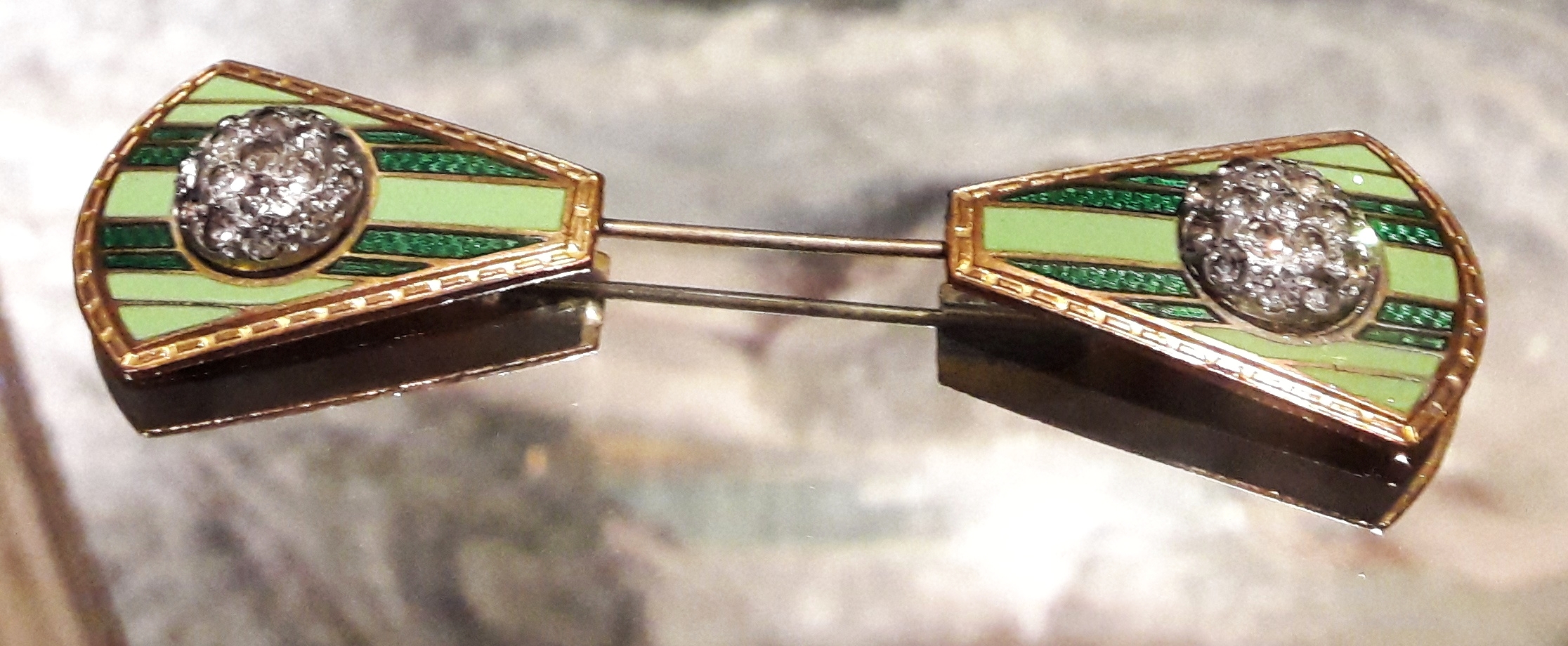
Hello there!  Saturday has somehow come around again, I don’t know where the week goes sometimes!  Today I wanted to talk a bit about enameling and jewellery.  Most people are aware that traditionally, enamel referred to powdered silica (or glass), fused to a substrate, in jewellery generally copper, silver or gold. There are many different styles of enamel, and it can be a great way to include colour in jewellery, instead of, or in complement to gemstones.

If you’re interested in a bit more information, you can read more here.

photo: https://commons.wikimedia.org/wiki/File:France_Jabot_pin_with_rhinestones.jpg


photo: https://commons.wikimedia.org/wiki/File:Belt_buckle_by_W._H._Haseler,_Birmingham,_1907-1908,_silver,_enamel_-_Hessisches_Landesmuseum_Darmstadt_-_Darmstadt,_Germany_-_DSC01107.jpg

With advancing technology, new types of enamel have been developed, and new and inventive ways of applying enamel to different effects.  Here are a couple of examples of more contemporary designs incorporating enamel from goldsmiths at the studio:

photo: https://jewelenvy.ca/node/403

photo: https://jewelenvy.ca/node/6

Interested?  Come in and talk to one of our goldsmiths about commissioning an enameled piece of jewellery.  Or, if you think you’d like to try it out, check out our classes in enameling and come explore this fascinating technique for yourself! (We have lots of classes that don’t need any prior experience!)

Happy Saturday, and see you soon!

Benitoite, the rare blue gem

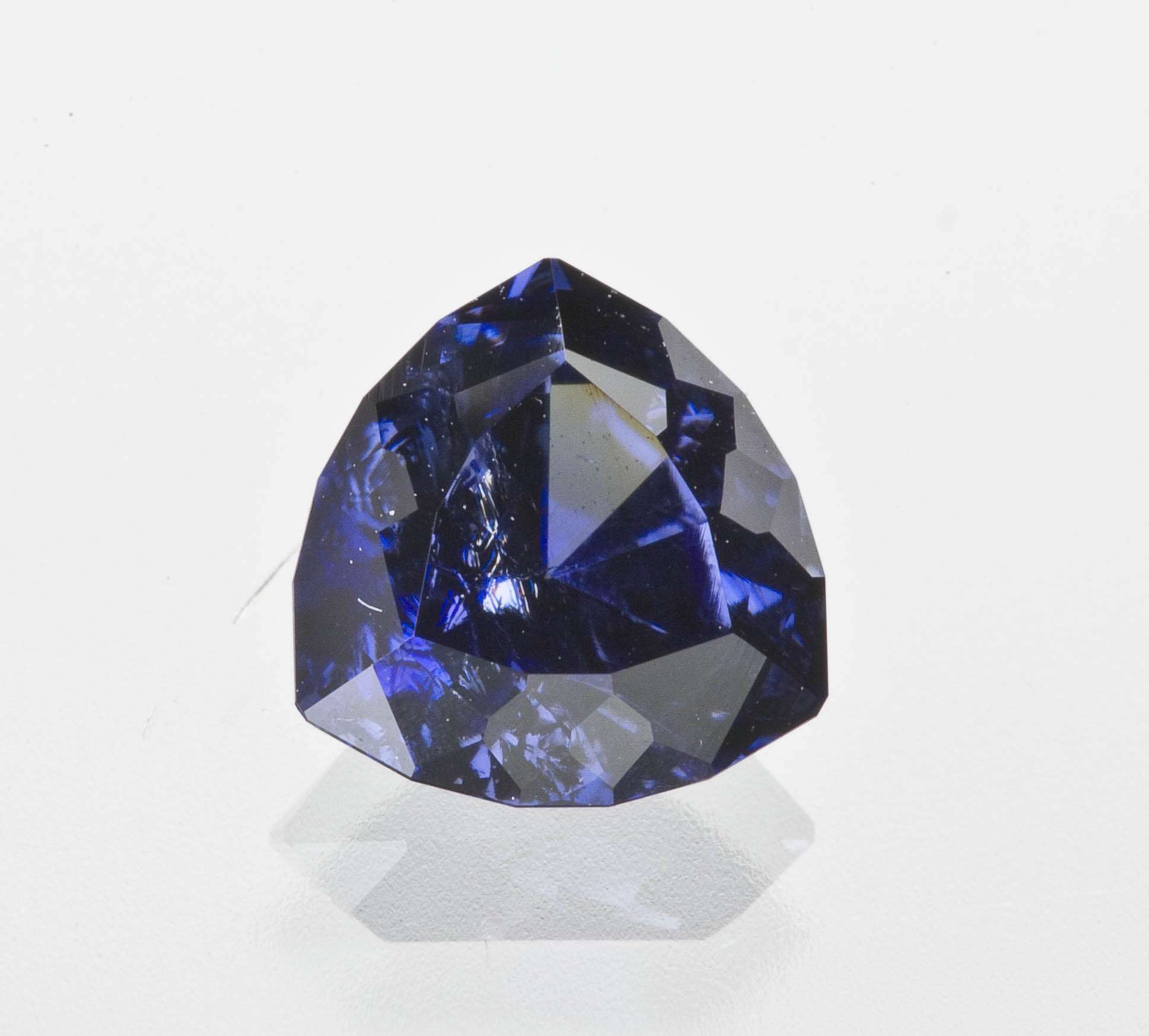
Benitoite is regarded as one of the rarest gemstones on the planet, it is formed in high pressure and low temperature conditions. Originally found on the San Benito Mountains in California, where it got its name, but it can occur in a number of isolated locations across the globe like Japan and Australia.

It’s also the State Gem of California!

The resemblance of color makes this gemstone almost indistinguishable from a blue sapphire,
although there is a trick to recognize this gem, put it under a UV light and see how this translucent gemstone becomes a glowing solid rock out of a Sci-Fi movie.


 Pretty nice stone, with a really nice trick.

Studio’s a buzz buzz buzzin’

Although the studio is at full capacity Gillian Batcher the studio’s scheduling guru (and Owner) is able to map our time for maker’s visiting from far and wide this summer. Today there is a class is full swing, goldsmith’s working away, and a temporary visitor creating in the studio today. 


Jade Dumrath, object and jewellery maker extraordinaire is in Toronto to celebrate her sister’s wedding and needed some time to make some special somethings before the big day. Check out more of her work here. And some of it just below ;o)  – Alexis


Slim ring box, as pictured on Jade’s Instagram


The Reasons You Shouln’t Work Out With Jewellery

I am something of a gym rat, and going every day of the week to the gym has exposed me to curious behaviors that otherwise will go unnoticed.

I saw a couple of girls on the stretching room ready to tackle a nice sweat session, and during the conversation that I was totally not eavesdropping, came the fact that one of them was wearing their engagement ring; this left me wondering how many people go through their exercise with jewellery on, and how bad it can be.

Seems obvious in my mind that you definitely should not wear jewellery during a workout, but there might be someone out there that will put vanity or emotion over logic, and keep their ring/earrings/necklace/etc…  

After giving it some thought I came up with some reasons why you should definitely not wear jewellery during a workout.

1. Jewellery is not indestructible:

We know some precious metals are very sturdy and tend to last longer than their cheap counterparts, white gold and platinum being the ones that resist more than any other; but that doesn’t make then impervious to damage.

The amount of material makes them somewhat fragile, and small details like prongs and settings can easily get bent, crushed or broken with little pressure; gemstones are at higher risk, some are very delicate and will crack with ease or can be forced out of the setting and get lost forever.

2. There is a risk of injury:

Rings and big dangling earrings can be a hazard during a workout; rings will generate discomfort while griping the equipment and the pressure can actually hurt your fingers; earrings that are too long can get tangled everywhere, poke you during certain movements or hit you during fast phased movements.


3. It can get lost:


Sweat will make your rings slip out of your fingers and a quick movement with your hand can send the ring flying and disappear forever, heavy earrings can fall, and chains will break; Jewellery is pricey, and you definitely don’t wasn’t to pay for your engagement ring again.

Stud earrings and piercing jewellery are fine, they are small and unlikely to get on the way during your workout session, but if you’re not sure, just have a bag or any container to put them in, place that on your gym bag with the rest of your jewellery, and put them in your locker (with a lock… please)

I hope this post reaches everyone that might need the pep talk and prevent some sad moments about lost jewellery or injury; specially you girl from my gym, your ring is really nice.

Have an amazing Sunday,

Mauricio.


Ponte Vecchio – From ‘Old Bridge’ to ‘Goldsmith Bridge’

Last spring I had the pleasure of visiting Ponte Vecchio in Florence, Italy and it was a beautiful experience to say the least. The Ponte Vecchio, or Old Bridge, was the only bridge across the Arno in Florence until 1218 and was rebuilt after a flood in 1345.
During World War II it was the only bridge across the Arno that the
fleeing Germans did not destroy.

Ponte Vecchio is a very romantic spot in Florence, with its great views over the river and of the bridge itself. By night, the wooden shutters of the shops create a look like suitcases
and wooden chests, making it a very suggestive route to take for an
evening passeggiata, or stroll.

There have been shops on Ponte Vecchio since the 13th century. Initially, there were all types of shops, including butchers and fishmongers and, later, tanners, whose “industrial waste” caused a pretty rank stench in the area. In 1593, Ferdinand I decreed that only goldsmiths and jewelers
be allowed to have their shops on the bridge in order to improve the
well being of all, including their own as they walked over the bridge.

Today there are hundreds of shops alongthe Ponte Vecchio that glisten with gold for your viewing and purchasing pleasure. I know I indulged in a couple keepsakes for myself and I encourage you to do the same next time you find yourself in this Artisan city ~ you wont be disappointed!

Happy Saturday!
Jess

×
Product added to cart

No products in the cart.