I have struggled with not being creatively driven when I had all the time in the world to create while staying at home to try and flatten the curve. I had hoped that I would use my “extra time” to create voraciously to prep for an Art Fair, but in all honesty I barely added the finishing details to pieces I had already photographed in the lead up of participating in this year’s Toronto Outdoor Art Fair – this year the Toronto Online Art Fair from July 2nd-12th. The online sale continue until December of this year, check out my artist gallery here.
My current work is shaped by my experience with my family’s foundry business which produces cast iron. A focus of this material has led to years of sketching ironwork producing distinct repeating shapes and patterns. Each piece starts as separate components and comes together with a purposeful awareness of composition and how the piece will be worn.
This past weekend I started to get back into the groove of creating more pieces using my ironwork patterns. Keep your eyes peeled for updates!
Hey everyone, this is Roozbeh Rastegar, a new member of Jewel Envy. I am a recent graduate from Jewellery Art Program at George Brown College and glad to join to the Jewel Envy professional team where I can design and create.
These are some samples of the pieces that I made to familiarize you with my taste of design and style of fabrication.
Golden goose 18kwhite and yellow gold, RBC colorless sapphire and smoky spinel, hand fabricated.Flight Sterling silver, 14K gold, hand fabricated.
Geometric commitment rings sterling silver, hand fabricatedNecklace from Broken Pieces of Clay and Ceramic Collection sterling silver, carnelian Brooch from Broken Pieces of Clay and Ceramic Collection sterling silverBrooch from Broken Pieces of Clay and Ceramic Collection sterling silver
I don’t know if you saw this necklace, I made it last year to put forward for an exhibition. I like to challenge myself to make something more elaborte than I usually do (I tend to favour sleeker elements and not too complex elements) at least once a year, and last year it was this one:
Oxidised sterling silver and 10kt yellow gold, two-tone blue needled felt, blue topaz and sapphire
I love the colours, and the movement it makes, so I was excited (and a bit sad) to sell it at Christmas. So, I decided to make another one (still one of a kind, though!). This necklace combines a number of different elements. As I’ve talked about previously, the elements I currently am using in my work are inspired by the shape and form of the immune system. For me, the sticks and rings are representational of blood vessels that red blood cells as well as cells of the immune system move around in. The small round roller-printed hollowforms are inspired by lymphocytes and the hollowforms with the needled felt are inspired by macrophages. Like alot of systems, the immune system is there to protect the body, but it can also be turned against the body, so this is the darker side.
When I decided I wanted to make another version, I decided this one should the the “light” version. I finished it awhile ago, of course, now the challenge is to try and take good representational photos. These aren’t the final pics, but some rough ones on their way to the being more professional:
This one has a white matte finish, and I decided on an orange/red colour theme with orange sapphire and deep red rubies
Here’s a bit of a closer look at the central elements, I think I still need to work on bringing out the texture on the hollowforms a bit more-what do you think?
The other challenge is to try and convey a sense of scale, since it’s difficult to tell how large/small the piece is without some kind of frame of reference, so I thought I’d try being my own model — I’m not sure I recommend this, it was the world’s biggest hassle trying to get some good, in-focus pictures. So far this was the best I could do:
It’s not bad, you can tell how big it is, but I think I need to find another model!!
I did manage to take this portrait that I was pretty pleased with, I think I might be using it some more in the future!
Anyway, fancy a nice piece of statement jewellery yourself? Come in and browse the studio, or talk to one of our goldsmiths about making that piece of jewellery you’ve been thinking about a reality!
The team at Jewel Envy is back. After almost three months at home, we are here again to work and make repairs, custom orders, give classes and more. We are here again to do our best for all of you.
It was difficult to get out and face the new normal, which is anything but normal. But we all need to keep going, and feel confident again. Work is a good and important part of what we all do and being back at the studio is amazing.
Slowly but surely we will build our new lives, and remember you are a big part of them. We need you to do your part, to feel confortable when you come back to see us. Jewel Envy has done all the changes necessary to assure your security and peace of mind.
We will keep up with custom orders, repairs, new pieces, classes and more. In all we do you are in our minds, and we need your support as never before. Take care, be safe. Start doing things as before, together we can keep going. We need the best from each other, we count on you!
This is another blog post by Siyu Hu our George Brown College 2020 intern, and now graduate!
During the third-year study at George Brown College while interning at Jewel Envy I made a necklace. The inspiration is from a combination of natural beauty from terrace fields and my interpretation of them. All the elements including the clasp, the chain, and the shapes of the main pieces are inspired by terrace fields.
Terrace is a piece of sloped plane that has been cut into a series of successively receding flat surfaces or sections.
Rhino is a 3D product design software which is widely used by jewellers. It can show your design in different ways such as technique drawing view, pen drawing view and the rendering view. I used Rhino to create a digital necklace design and chose green to be the base colour for every elements since it is the colour of the farmer plants I was inspired by.
Hand rendered drawing of design.Rhino rendered drawing of design.
Once the design is drawn in Rhino it is printed in 3D and then each piece is cast in sterling silver separately. Then the pieces are finished and I used enamel to create the natural lanscapes colour.
The finial piece is as below:
Terrace Fields Necklace by Siyu Hu Material: Sterling silver, 14K nickel white gold
“As a jeweler I’m interested in the animation, the living legacy of objects. When my pieces are worn, they’re activated – that is, their story and felt sense of meaning are brought to life.”
Artisan and educator Sewit Sium has been crafting historically referenced jewelry for over a decade. She is driven by the idea that adornment is not solely a marker of trend or wealth, but also a valuable educational tool, reflective of history, culture, tradition, and indigenous technologies. In many instances, what we choose to wear and how we choose to wear it reflects our ancestral memory, relations, and ongoing story as people.
Sewit Sium jewelry was born to uphold this idea that fashion is language and a powerful form of storytelling. Each hand crafted piece takes us on a journey through history, while embodying a story that is relevant to our lives today. The line includes powerful amulets and talismans that anchor us in the present moment, only to say “Im here but my history walks with me.”
With an emphasis on visual political statement, Sewit’s mission is to reconnect cultural image and iconography with original context. She draws from a rich diversity of African iconographies and artistic movements from both the continent and its diaspora; each offering unique insights and stories of the world and our place within it. Therefore all designs seek to beautifully honor and celebrate the original peoples that lay claim to them.
“I’ve always been captivated by the intersection of jewelry, education, and grassroots activism. Prior to starting my business, I taught Fashion Politics and Design at various High Schools in NYC, using jewelry as an educational tool, as primary source material (like a text) to teach predominantly Black and Brown youth about their history, about the world. We had powerful conversations about where we came from, where we are now and where we are going.”
“We literally know about the world because of what was engraved and memorialized in jewelry and stone. Jewelry is the oldest form of decorative arts, a phenomenon that was born on the African continent. Without it, we wouldn’t know about ourselves. This is why I’m continuing the legacy of hand-making statement jewelry encoded with this history, culture, sentiment, and love. My hope is that people adorn and become activated and inspired by my work.”
Axum Gold Coin Ring
A large part of what we know of the Ancient Kingdom of Axum, aka Aksum (modern day Eritrea and northern Ethiopia) is engraved in gold and intricate and opulent jewelry. This ancestral knowledge is literally imbued in Axum Gold Coin Ring – in the minting and movement of indigenous currency, which has since been found as far as India.
Coral Scarab Amulet Ring
The Scarab, a beetle indigenous to Egypt, signifies life, rebirth and regeneration. The ancient god Khepri, Ra as the rising sun, was often portrayed as a scarab beetle or as a scarab beetle-headed man. Khepri renewed the sun every day before rolling it above the horizon, then carried it through the other world after sunset, only to renew it, again, the next day.
All quotes and information are from Sewit Sium’s website, and Shoppe Black’s feature on the artist written by Tony O. Lawson. Images are from Sewit Sium’s website, as well as picuki.
Recently I’ve been experimenting with plaster as a material to create work with. Below is my journey so far!
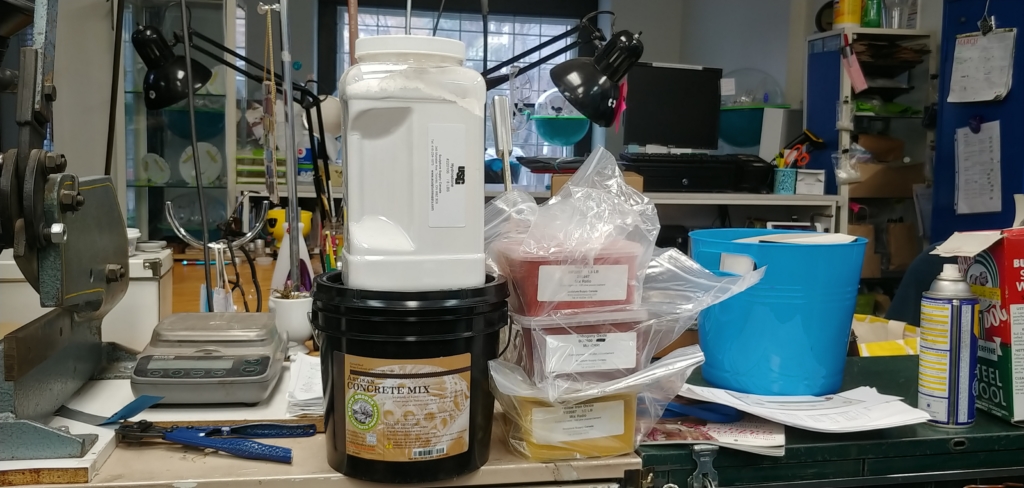
It arrives! Hydrostone plaster & powdered pigments!
I’d been planning on exploring this material in my work for a while, but with the recent slowdown due to COVID19 I figured this was the time.
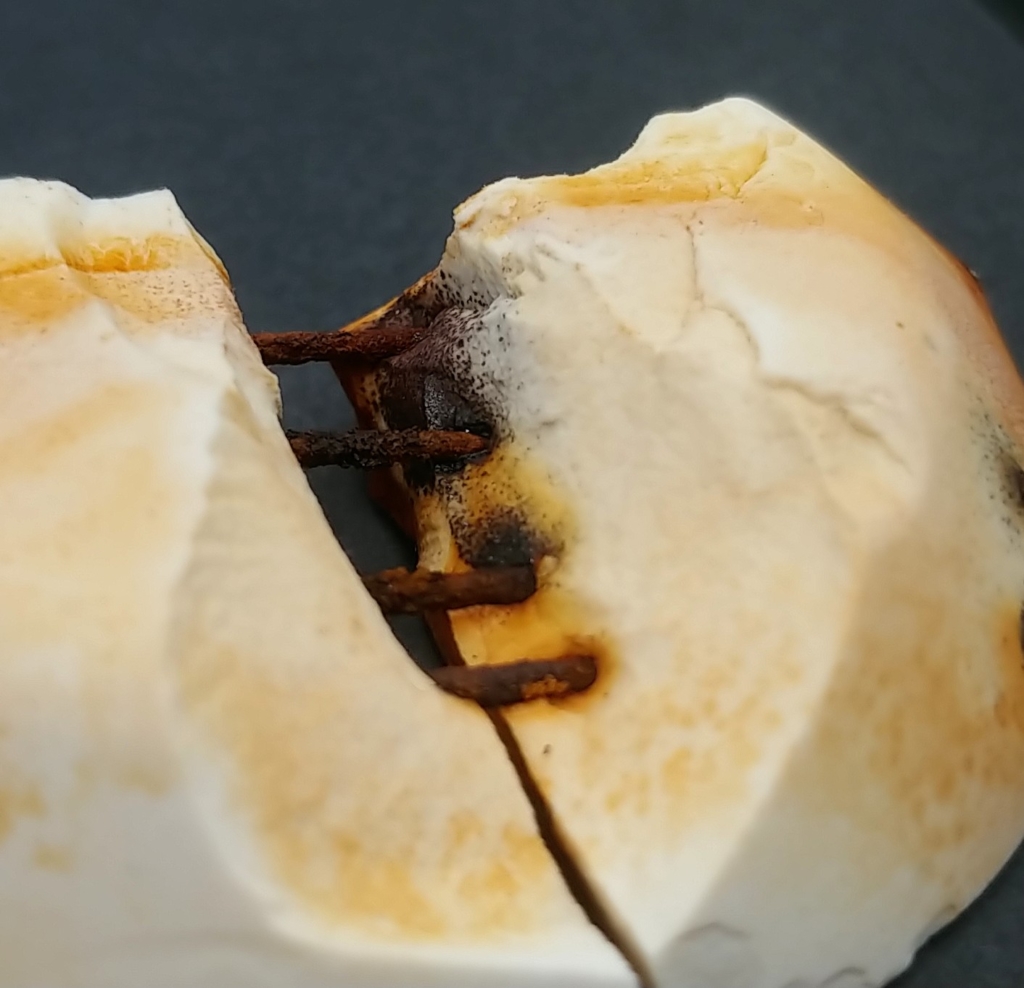
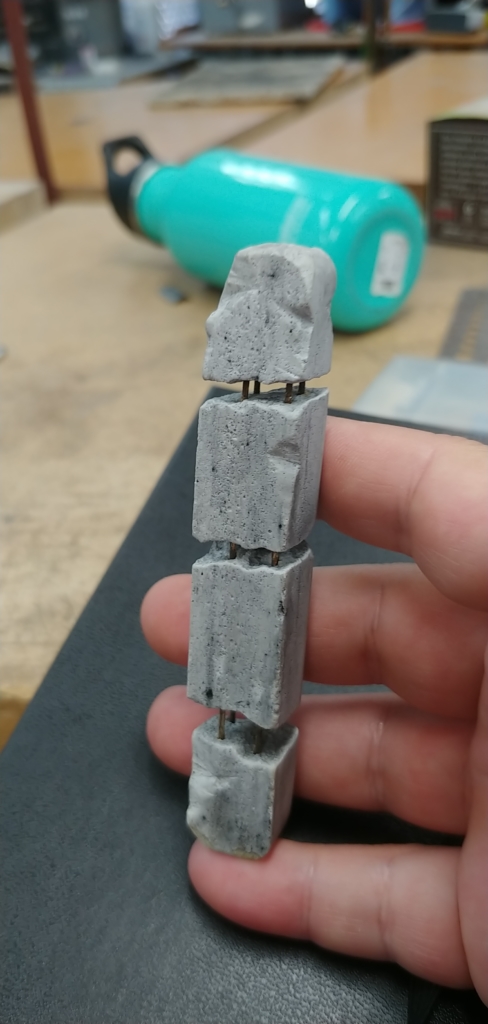
My first tests mostly focused on embedding steel into the plaster and then revealing it and letting nature do its work via rusting.
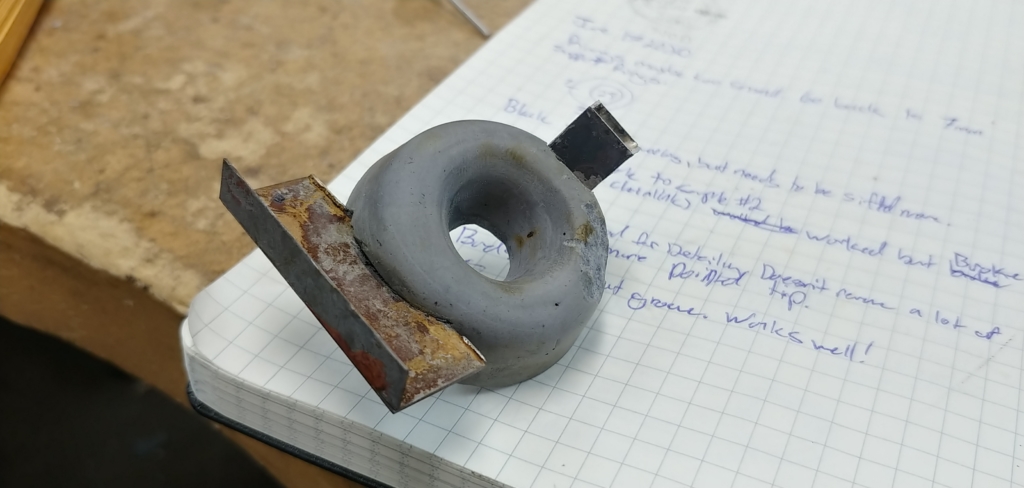
I’ve started keeping a log of my tests as I go! This will help in the future if I need to revisit the process.
I’ve still got a lot of testing to do, but the most recent one above is looking promising! Excited to continue down this path and post more results here.
Jewellery is special. It allows us to keep it with us everywhere and anytime. Thus when purchasing jewellery, we always want to choose something not only beautiful but meaningful.
Do you know what’s your birthstone? Do you know the meaning behind your birthstone? Today I’m going to introduce all birthstones and their Metaphysical Properties.
Synthetic Stone/Colour: Synthetic Emerald or Spinel / Green
Emerald: believed to have life, they aid in growth and increase agricultural production. Viewing an emerald soothes and refreshes the eyes. Worn to relieve the pain of childbirth.
Ruby: a symbol of royalty, it may give the wearer the power of life and death. Gives health, wealth, wisdom and success in love. Prevents bleeding and heart failure.
No doubt about it, we all love jewelry! But where did it all begin?
As far as we know, the first jewelry we are aware of wasn’t even created by ‘human’ (homo sapien). Rather, by Neanderthal living in Europe. Recently, archaeologists excavated 100,000 year-old beads, made from Nassarius shells, are considered to be the oldest known jewelry.
Ancient beads made from seashells, appx 100,000 years old.
At approximately 100,000-year-old, these shells were discovered in Israel and Algeria. This discovery suggests that modern human forms of behavior, such as language, developed earlier than previously thought. The thought process involved in making jewelry involves communication, perhaps trade, perhaps a sense of status, recognition of beauty, and so on.
There is no way to know for sure why these beads were made, who wore them and why, but if these shells could talk, I would have a lot to ask them!
Interestingly enough, June has three gemstones associated with this month. There is an odd story associated with the birthstones that is not well known among the general public. While there have always been stones associated with seasons, zodiac signs, birth totems, religious figures etc… The “traditional” birthstones we see today are actually a 1912 marketing invention. Prior to 1912, birthstones varied depending on culture and religion. There was also the issue of some stones being represented in multiple months. Pearl, for example, is a birthstone of February and November. June’s birthstones were actually cat’s eye, turquoise and agate, mainly in relation to the zodiac signs of Gemini and Cancer within the month of June. In order to “standardize” the birthstones, the National Association of Jewelers, now called Jewelers of America met in Kansas, and officially adopted the list you see today. Over the years, other gemstones were added to raise sales of that particular stone.
The gemstones of June.
That’s right, there is no true reason for the monthly gemstones you see today other than to try and increase sales of that stone. Yes there is some relation to traditional stones mentioned in religious/spiritual text but that was not the focus. I find it interesting that some of the most expensive gems are birthstones over their less expensive counterparts or how some months have multiple stones if the previous birthstones were of lesser value, like June.
In the previous months I didn’t touch on this subject as most months had only one stone, with the exception of March that has bloodstone and aquamarine as its representative birthstones. Since most people are unfamiliar with bloodstone (a silicate relative of agate, onyx, jasper and chalcedony) I chose the latter. However, as June has three stones, moonstone, pearl and alexandrite. I chose my favourite stone of the three, Alexandrite.
Alexandrite is a variety of the mineral species chrysoberyl, with the chemical formula BeAl2O4 and while the name is similar to beryl, it is only the presence of beryllium that connects these two stones. The other variety you might be familiar with is the gemstone “cat’s eye” also known as cymophane. Etymologically, chrysoberyl is derived from the Greek words χρυσός chrysos and βήρυλλος beryllos, meaning “a gold-white spar”. However, the Greeks never knew of this stone.
Natural chrysoberyl displaying its hexagonal twinning.
0.98ct Cushion-Cut Greenish Yellow Chrysoberyl
Cat’s eye or cymophane, variety of chrysoberyl.
What is so fun and interesting about this gemstone/mineral is that we have a record of its discovery, and when it became a classified mineral. Chrysoberyl was discovered in 1789 and then described and classified as a new mineral in 1790 by the German geologist Abraham Gottlob Werner. This was the golden-yellow variety of chrysoberyl that many may have confused for a light coloured peridot. Alexandrite was discovered later, and originally was thought to be some unique variety of emerald. It was discovered in 1833 along the Tokovaya river of the Ural Mountains. It was described as a greenish crystal, with the strange ability to change color and appear red under candlelight. Then in 1834, the Finnish mineralogist Nils Gustaf Nordenskiöld had the mineral new gemstone officially classified as a variety of chrysoberyl and named the unique variety “alexandrite” in honour of the future Tsar Alexander II of Russia.
Alexandrite is identified as:
1) Orthorhombic Crystal System
2) Oxide Category
3) Simple Oxide Family
4) Mineral = Chrysoberyl – BeAl2O4
5) Variety = Alexandrite.
Now what makes alexandrite so appealing and expensive.
To date, alexandrite is among the most expensive gemstones per carat weight due to its rarity, durability and unparalleled beauty. Current prices of alexandrite place the stone from $30,000 per carat up to $60,000 per carat depending on the 4 C’s. For reference a carat is equal to 0.2g and since it’s exceedingly rare to find a cut alexandrite over 5 cts, the price jumps rapidly. Now an interesting side note, because alexandrite and cat’s eye are the same mineral you can have the two combined, which is extremely rare and pricey. With a Mohs hardness of 8.5, being only surpassed by sapphire, ruby, moissanite and diamond, this stone’s vitreous luster is quite resilient. While the stone is rare and durable, it’s beauty is what sets it apart from the other stones, mainly its ability to change colour.
Cat’s eye alexandrite.
Alexandrite has an interesting way of playing with physics and light. It possesses a characteristic phenomenon known as metamerism or more simply “colour change”, which is the ability to appear different colours with different light sources. Alexandrite was one of the first gemstones discovered to display this phenomenon so strongly. The stone appears emerald green in daylight and raspberry red in incandescent light. This colour change varies stone to stone and it’s all because of the presence of chromium in the mineral. The alexandrite variety of chrysoberyl results from the small scale replacement of aluminium by chromium ions in the crystal structure, BeAl2O4 as the valence electrons are similar. The presence of chromium results in an intense absorption of light over a narrow range of wavelengths in the yellow region (580 nm) of the visible light spectrum. Human vision is most sensitive to green light as it is perceived brighter and least sensitive to red light as it is perceived dimmer. When you combine the absorption of the yellow light, mixed with the colour sensitivity of the human eye, alexandrite appears greenish in daylight, as the full spectrum of visible light is present. However, in incandescent light it appears reddish as this light emits less of the green and blue spectrum and more red. Science to us, but it was magic and witchcraft to those of the past.
A great visual from explaining what causes the colour change within alexandrite.
As alexandrite is so wildly desired there are imitation and synthetic stones to watch out for. The main stone gemmologists see imitating alexandrite is a variety of synthetic colour change sapphire with vanadium to produce a colour change. When looking to see if this stone is alexandrite or sapphire, we look for curved striae within the crystal. These are curved lines created from the process of how they make synthetic sapphire (I will go into more detail about this process next month as we discuss rubies). These imitation stones will appear more blue than green in daylight as it is oddly hard for chemists to make emerald green sapphire. When viewed in incandescent light you will see more of a purple hue than red. There is also colour change cubic zirconia that can imitate alexandrite. Again the colour is not the same and you will see that price does not match the clarity and beauty of the stone. It is important to keep the price in mind because even true synthetic alexandrite costs more per carat than the two limitations mentioned above. Interestingly, some other natural colour change stones may be used to pass off as alexandrite. Zultanite, which is a lime-green to pink colour change stone, is such a gemstone. It’s a natural stone but because of the price difference it is sometimes used to pass off as a pale alexandrite.
Colour change sapphire used to imitate alexandrite.
Inclusions seen within synthetic alexandrite, in this case we see the aligned teardrop shape from the rotation of the pull method.
Some examples of natural inclusions seen within alexandrite.
Synthetic alexandrite is created through a process known as the “flux-melt” process, a method that involves adding fluxes to the melt to help with lower melting temperatures and cleaner crystallization. For alexandrite the process is a bit different, using what is known as the Czochralski pull method (say that 5 times fast). In a nutshell, synthetic alexandrite is grown from a melt by lowering a seed crystal into the melt to start the crystallization process and then slowly pulled up and rotated. As the seed crystal is pulled up the melt cools and crystallizes into a clean mineral cylinder. Since all minerals carry evidence of formation within them, this process will lead to unique liquid filled feather and blebs within the crystal. There may be teardrop shape inclusions or presence of platinum crystals within as platinum is used as a flux in this process. If you have a really good eye, you may be able to see swirls within the crystal as a result from the twisting motion of formation. Natural crystals don’t have any of these features within them, Instead natural alexandrite will feature other mineral inclusions and/or very geometric inclusions and fractures filled with only water and carbon dioxide. Even though this stone has a synthetic counterpart, its colour will still appear off compared to a natural alexandrite, science has yet to discover how to make an exact copy of these beautiful gems.
A diagram showing the Czochralski Pull method.
What the diagram looks like in real time. This is such a cool picture, well for me anyways.
Regardless, alexandrite is one of most beautiful stones I have seen. It will always be a regal stone to me and many others. Next month I dive into the reddest of the red, ruby.
Alexandrite front and center, exploding into diamond. This gorgeous piece is part of the Rubeus Imperial Alexandrite Collection, presented by Rubeus Milano. The necklace features an internal chain shoulder strap and is embellished with white diamonds; cabochon rubies, sapphires and emeralds and rubies, sapphires and emeralds hand-cut in the shape of leaves. There are also natural pearls all set in 18k white gold. It is definitely a standout. The retail price? $438,000.