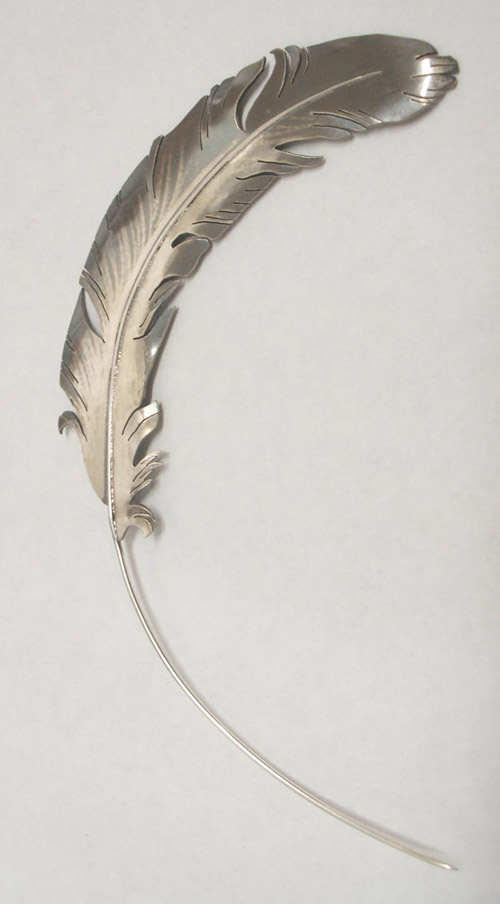
Continuing on with my contribution to the blog last month, today we’re looking at another artist who’s work I find very inspiring. Terhi Tolvanen is a well known contemporary jewellery artist from Finland, who has been creating work for over 20 years.
I find her work interesting because of her use of organic materials, and the obvious influence the natural world has on her aesthetic, but also because she sometimes subverts the material, almost turning it on it’s head, to look somewhat mechanical. Evidence of the hand is always present, albeit naturally, without it being heavy handed (excuse the pun).
Within her process, the material directs the outcome of the work, which is something I really identify with in my own experience. Whatever ideas we might have coming in to a process, in terms of concept or design, inevitably the nature of the material dictates what is possible, and where you can take it.
Lately I have been busy behind the scenes trying to reintegrate my old blog onto my website. Luckily there is a blog section… but unlucky for me it means having to transfer each post I made in the past 10 years over one by one, yay! Thankfully I was not a very prolific blogger, however I was extremely active back in 2011 apparently. I included pics grabbed from some of my favourite past post. And if you can’t get enough you can visit to see more!
Here you can see a trio of resin rings I created in 2010. These were just at the beginning of me exploring with resin, so there are quite a few resin posts after this one!This is one of my past custom pieces that I am most proud and excited to see; it combines a Fleur-de-Lis and Ankh symbol to indicate both her and her partner’s heritage. I had completely forgotten about creating these! These were one first enamel pieces that I created as giveaways I actually laughed when I saw this piece. It is hiding in my locker somewhere… I had intended it to be a pin but then wavered and thought about making it into a necklace… which lead to me put it away somewhere and never actually finishing it!Another giveaway situation! I created several of these pins as a part of a swap for the Metal Arts Guild.I created several posts about the Jewel Envy group show “Red.” Did I ever post images of all the completed pieces I made? (no!) Although there is this staged pic of one of three shield that I fabricated and something else to add onto my to-do list.
I hoped you enjoyed a bit of a trip down memory lane. If you end up browsing my blog let me know! If you have a favourite post also let me know!
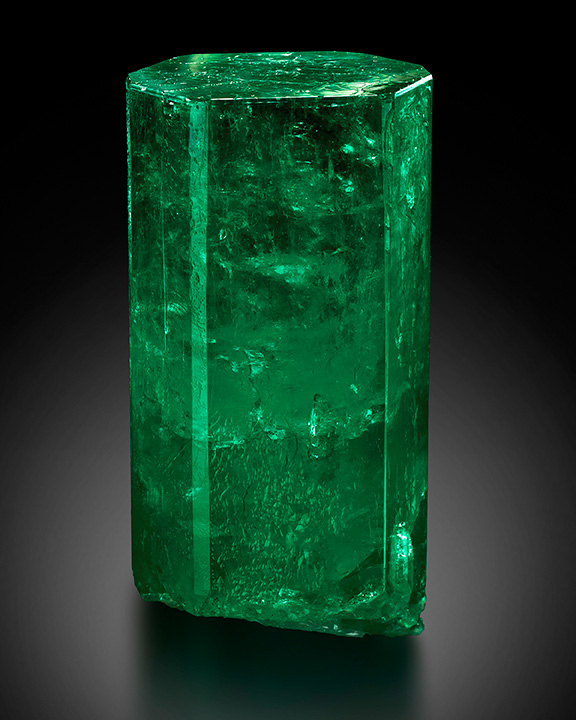
May, my favourite month, because it’s my birth month, but also we get to talk about the most revered, green gemstone. Emerald is known to be the traditional birthstone for May and is the rich, vivid green variety of the mineral beryl that symbolizes the rebirth and renewal that comes with spring. Emeralds have a long history, with known records of mining dating back to 1500 BCE in Egypt. This was the primary source of emeralds for many years until the 1600’s when the Spanish invaded South America and discovered the source in Colombia. Today Colombia is still the primary source of emeralds with 50-95% of the world’s emerald production. Zambia is in second place and while emeralds are rare, they can be found worldwide. Even Canada is host to several small deposits of emerald in the Yukon.
Just like aquamarine, Emerald is identified as:
1) Hexagon Crystal System, not to be confused with crystal habit. (Note, habit is how the mineral crystallizes)
As stated before, the varieties of beryl aside from emeralds that you may know well are aquamarine (see March’s blog post for more), morganite (light pink/peach), and heliodor (golden yellow). However, there are other kinds as well such as goshenite (colourless), red beryl (deep red/crimson), green beryl (light lime to mint green) and mixixe (deep blue colour but fades to brown in daylight due to UV).
BVLGARI Emerald Suite – The Infamous Elizabeth Taylors Emeralds The suite of emerald and diamond jewelry from the Italian jewelry house, Bulgari was a gift from Richard Burton, the result of several trips to the Bulgari boutique on the Via Condotti in Rome from 1962 – 1967. Necklace estimate: $1 million to $1.5 million; Pendant estimate: $500,000 – $700,000; Ring estimate: $600,000 – $800,000; Bracelet estimate: $300,000 – $500,000; Earrings estimate: $150,000- $200,000
How is emerald so green? Emerald, (derived from σμάραγδος or smaragdos; ancient greek for “green gem”, big surprise there) gets its colour from traces of chromium, vanadium and iron within the crystal structure. If you want a real head-scratcher, chromium is also responsible for the red colour of rubies. Interestingly this all comes down to how light interacts with chromium ions, chromium(III) to be specific, within the crystal lattice. Without getting too technical, when chromium is in the beryl it will absorb more of the violet and yellow-red wavelengths of visible light, thus we see green. With rubies, the chromium absorbs more of the blue-green and some yellow wavelengths and thus we see red. Vanadium on the other hand just gives you green and if iron is present, it can give the emerald a blue tinge.
Identifying and labelling the many degrees of green for emeralds. All of these above colours are emeralds with greater than 75% colour saturation. If the emerald colour is too light then the stone is classified as a green beryl. Unfortunately, when this happens the price drops significantly as well. However, there really is no difference between green beryl and emerald aside from colour intensity and can be a great substitute for an emerald if you want to keep it natural and in the family.
Ready for some REAL gemmology? With the high price of emeralds, there are many synthetics and imitations to watch out for when hunting for emeralds. First, some terminology needs to be explained, mainly the terms “natural”, “synthetic”, “imitation” and “treatment”. A natural gemstone refers to a stone made from the earth and is what most people desire/expect. A synthetic gemstone is an identical copy of a natural, just made by man. This means it has the same chemical formula and crystal structure as its natural counterpart. Ideally, the term “synthetic” should only be used if the man-made stone has a natural counterpart. If there is no counterpart, then this stone is referred to as an “imitation”. An imitation is a stone or material representing another stone. Imitations can be natural or synthetic and confuse many people. Cubic zirconia is one of the most common samples for imitating precious stones. Treatment or a treated stone is a natural stone that has been tampered by humans to improve colour saturation, clarity, and durability. There are many interesting ways we have discovered to help improve the natural beauty of precious stones.
A beautiful sample of a natural trapiche emerald, a rare crystal of emerald created by rapid crystallization. You can guarantee these emeralds are natural.
For emeralds, the most common treatment you will see is oiling, due to their clouded and brittle nature. Oiling is as the name suggests, the stone is placed in heated oil in a vacuum chamber and the oil is then drawn into the cracks of the stone. This helps increase the colour in pale stones and seal up fractures to improve the stone’s clarity and durability. Balsam and cedar oil are what is used for emerald treatment as the refractive index of the oils is similar to the refractive index of emerald, thus you can hide the fractures better. This is a common treatment with emeralds and is not always disclosed in the sale. Avoid using strong dish soap and ultrasonic washers if you want to wash your emerald jewellery.
Luckily for you, emeralds are highly desired that we even accept the impurities within them. This will include fractures, pockets, and other mineral inclusions. You will hear many refer to the impurities as the emeralds jardin; the garden within. With these impurities present, it is fairly easy to discern if you have a natural or not, as synthetic and imitation emeralds will appear internally flawless. A flawless gem is the most prized gem. Many of these features of the jardin can be seen with the naked eye or with a loupe. When it comes to synthetic stones, you’ll need a microscope to discern the origin of your emerald as you won’t have a jardin. If there is something in your synthetic stone you’ll know right away something is off. All gemstones leave clues as to how they formed within the crystal structure and carry trace element signatures. While the chemical signature is the best way to identify a stone’s origin you have to destroy a piece of your stone. I don’t think many people would be interested in having a hole in their $25,000 emerald to see if it’s natural or synthetic. Thus by using high powered microscopes and polarized light, gemmologists can see signatures as to how gemstones crystallized and your stone is left untouched. Synthetic emeralds are produced either through the flux method or hydrothermal method. These methods should be disclosed when selling synthetic/lab-created emeralds and if not, ask.
Natural vs Synthetic. On the left side are inclusions seen within synthetic stones. Notice how the bubbles are arranged to perfectly compared to the natural inclusions to the right. This is the result of the flux process for synthetic emeralds and contains water and flux additive. The natural incisions show something called three-phase inclusions. The cube you see is actually salt, the bubble carbon dioxide and the liquid is water, hence “three-phase”.
Evidence of Synthetic Origin: Microscopic examination is the best method for separating synthetic emeralds from natural emeralds. The photo above shows chevron-type growth zoning in a synthetic emerald grown by the hydrothermal method. Form Geology.com
If you’re buying emeralds or you’re not sure if the ones you have are natural emeralds, you’re best to seek professional help with a certified gemmologist to identify them or buy them for you. Otherwise, here are several tips to keep in mind if you happen to find yourself in the market to buy one.
Who’s who?: A collection of green faceted stones of various types. Most of them are not emerald. If you want a green gemstone, which one would you choose based upon colour and appearance?
Beginning in the back row at left – the name of the stone and its locality, carat weight, and the price that we paid: 1) chrome diopside from Russia, 1.16 carats ($11); 2) green quartz (dyed) from North Carolina, 2.6 carats ($8); 3) green tourmaline from Brazil, 0.77 carats ($58); 4) lab-created emerald manufactured by Chatham Created Gems, 0.23 carats ($37); 5) emerald from the Crabtree Mine, North Carolina, 0.50 carats ($80); 6) emerald from Colombia, 0.53 carats ($112); 7) tsavorite garnet from Tanzania, 0.68 carats ($105). From Geology.com.
First, most “emerald” you find will actually be imitations. Look at the name of the product. Always question something if you see anything attached to the name aside from “natural”. Many stone dealers will sell items with “emerald” in the title to make the stone more alluring. Under section § 23.26 of the Federal Trade Commission’s Summary of Basis and Purpose for the Revised Jewelry Guides, it states that “It is unfair or deceptive to mark or describe an industry product with the incorrect varietal name”. Titles like “emerald tourmaline”, “emerald quartz” or “yellow emerald” and “emerald colour” should raise suspicion right away. Another example is if there is a name in front other than a location, “Soude emerald” is one example of emerald coloured glass, a common cheap imitation. After looking at the name, look at the price. Emeralds are not cheap and if you think you’re getting an amazing deal for a clean stone with vivid colour, it’s probably not a real emerald. Even synthetic emeralds are more costly than natural imitations like tourmaline, diopside and dyed quartz. Third, if you are buying emeralds in jewellery, check the metal and surrounding stones if there are some. It’s not worth it to set an emerald in plated metal and with cubic zirconias, you end up greatly devaluing your emerald that way. Finally, if you are buying rough emeralds in bulk or individual specimens check your stones and always buy from a well-reviewed source. Look for a hexagonal prism shape or something to give you an indication of 6-fold symmetry in your crystals.
While these are just some quick pointers for general interest if you are interested in more information I suggest some of the links and books below.
Well-rounded information regarding the formation of emeralds, grading of emeralds and identifying synthetic or imitation stones with some deeper technical insight.
GIA encyclopedia page for emeralds. Very friendly for just starting to understand gemstones with links to countless articles about emerald mines, unique specimens, emerald history and more
Gemmology by Peter read – A gemmologist bible, make sure to look for the latest addition as there is always new information to be added to textbooks. This book covers ALL the gemstones as well as how to use the tools to identify naturals, synthetics and imitations. Warning this book is very technical.
Jewels: a secret history by Victoria Finlay – an excellent read into the history and lore behind some of the more renowned gemstones. The author also has a great book about the history of pigment and colour.
Stay tuned for next month as we discuss pearls… or moonstone or alexandrite. One of those stones or June.
As a Chinese, I am really obsessed with traditional Chinese jewellery. Today, I am going to show some amazing pieces from The Palace Museum.
Beginning with a little background of Forbidden City 故宫. Forbidden City was the former Chinese imperial palace from Ming to Qing dynasty, between 1420 and 1924. Now it becomes a museum, which known as the Palace Museum. All the jewellery below are the collections from the Palace Museum. Most of them were belong to the empresses or imperial consorts. Jewellery from Ming and Qing dynasty, often made with gold or jade, combining with all kinds of precious and semi precious stones. Most of the jewellery has a pattern that related to happiness, auspicious, thriving, prosperous, etc., to represent the good wishes.
This hairpin is from Qing dynasty (1644-1911). In the centre is the Chinese character for longevity. Gold filigree creates five fungi, together forms a plum blossom. Each fungus inlaid with red tourmaline. Blue kingfisher feathers were applied to add rich colour. This is a very typical Qing dynasty jewellery.
Two bangles were made with agarwood, with gold inlay. The gold granulation forms in the Chinese character for longevity. The bangles could use to drive out the evil spirts.
This coronet is framed by iron wire and paperboard. Surface desin made by black silk threads with kingfisher feathers. Five gold filigree phoenixes inlaid with pearls. Tassels were made with pearl, coral, turquoise, lazurite, ruby and sapphire. This luxury ornament is for empresses, and only worn on festive occasions and traditional holidays.
Hope you enjoy these incredible pieces. All the informations and pictures are from the Palace Museum website (https://en.dpm.org.cn).
I notice a lot of things, and I like looking at a lot of
different sceneries. One of my favourite
(but not often enough exercised) things, is landscape photography. In contrast, I’ve also always enjoyed looking
at urban landscapes and appreciate intricate and interesting architecture.
As some of you may know, I lived in the UK for some time. I had the privilege of doing a fair amount of traveling. These are some of my favourites:
La Sagrada Familia, Barcelona, photo from wikimedia commons
Casa Batllo, Barcelona, photo from wikimedia commons
I could show you a gazillion more, but I don’t have that kind of time to track down all my photos! But here’s just one more of a typical architectural feature that I used to constantly see around Scotland.
old church in Scotland
If you look at the upper left, you can notice a rather distinctive stepped gable edge. This is a Dutch architectural feature, sometimes called a crow-stepped gable or corbie gable, which occasionally you might notice if you wander Toronto looking at older houses and buildings.
When I first moved back to Toronto, I spent alot of time wandering the city getting to know it again. It was an incredible experience for me, and I spent alot of time just looking (and a little bit of capturing!). These are some of the things that have particularly caught my eye:
Now all of those shapes and features are rolling around somewhere in the back of my brain. Eventually, I’ll start sketching some new pieces based on all these features, and from there, develop them into new jewellery. Not sure when, but they’ll appear eventually. When they do, you can be sure that I’ll share them with you!
Intrigued? I know I am! I never quite know what my brain is going to come up with until it appears. Some things are like a bolt of lightning, others are like this–they need a certain amount of work before they become real designs!
Stay safe and healthy, and I look forward to seeing you all when the studio is open again. Want to connect sooner than that? Email the studio!
In the morning when I go into the kitchen, I try to
make coffee without any success. I used to
buy my coffee from Tim Hortons in my way to Jewel Envy and now I stand in front
of my window and I ask myself, what has happened?
Nothing is the same, I don’t go out, I can’t enjoy
a bus ride and although has only been four weeks, it seems a life time!
Where are my friends, my neighbours? I live in a
building and even when I go down to throw out my garbage, I rarely see any one.
If I do, they generally turn away because no one wants to get to close.
I now stand in line to go inside the grocery store,
I were a mask and a pair of gloves! What happened to us?
I miss my bench at the studio, my friends, my work,
and my old life, I had a life before, a great life, I hugged a lot, I kissed a
lot, I laughed a lot, and I enjoyed every minute of it. I’m not keen being on
my own, I need people around me to feel like myself again, I miss my other life
a lot!
But even in the incredible times that we are living
now, my memories, my dreams, my loves, are intact. I’m very lucky. I never missed the opportunity to count my
blessings! Life has been difficult, with a lot of good and a lot of bad, but if
I look back, I would change very few things. The good more than the bad has
made of me the person I am and I like myself!
I don’t know if my life, our lives are going to be
the same again, but hopefully, we all will be much more human than before, we
know now many things that we didn’t know before.
This poem from Albert Camus seems to capture how I
feel.
” In the midst of hatred it seemed to me that there was an invincible love within me, in the midst of the tears it seemed to me that there was an invincible smile within me, in the midst of the chaos it seemed to me that there was an invincible calm within me. I realized despite all that in the middle of winter there was an invincible summer inside me, and that makes me happy because no matter how hard the world pushes against me there is something better pushing back.” Albert Camus
Being a Goldsmith has taught me a very important lesson about life – that all things created are never beautiful in the beginning. First there is a vision, a dream. Then come the unknowns, the molding, the mistakes, the re-dos, the things that don’t quite fit, the dirty hands, the frustrations, the ah-ha moments, the seeking of guidance, the patience, the staying the course, the polishing and refining, and the destination.
In process (before): Men’s rings by Jessica Rita Jewelry
The process looks rough 90% of the way through, and then…there comes something beautiful. And then we do it all over again, why?
Because it is our nature to KEEP CREATING.
Polished (after): Men’s Ring by Jessica Rita Jewelry
The lesson that is repeatedly taught for me through this profession is to always stay the course. To keep chipping away, because sometimes its not meant to all come together right away. Sometimes there are important lessons, people and gifts that await you along the journey toward your dreams.
Inspired by Alexis’ post explaining her business name, I thought i would explain mine. My actual name is Alex Kinsley, so the first part of my business name is pretty easily explained. However the Vey part is my mothers family name.
I used both of my parents family names as a way to honour them as they have been a huge driving force behind me in becoming a jeweller. Both of them were jewellers, although my mother has since become an elementary school teacher.
My father at the One of a Kind show in Toronto, 1980sMy mother in an article in The Free Press of London OntarioMe at Joya Art Jewellery Fair, Barcelona, 2017
Today I wanted to share a little bit about the process of water casting. This is a technique that I use quite frequently in my work for creating collections as well as one of a kind pieces. Water casting is a process where metal (I like to use my scrap silver from previous projects) is melted to its liquid state and then poured into a container of cold water. The quick change in temperature freezes the metal and creates really unique organic forms. One of the things I love about this process is that no two pours are ever the same, below you can see a few examples of the results of different pours.
In this process, the water has the most control over the resulting forms, but the speed, height and way you pour the metal into the water will have some influence on the type of shapes you get. For example, slow pours from up high usually result in small round shapes while fast pours close to the surface of the water often create larger cup shaped pieces. In my droplets collection I take my favourite water cast pieces and make molds of them so I can recreate the same shapes again and again. When I get some of the really large cup shaped pieces I really enjoy turning them into one of a kind statement rings with pearls set inside. The cupped shape of the metal piece supports and protects the pearl. Below is a process picture from one such ring as well as the final result.
I hope this post was interesting and informative. If you’re interested in a custom water cast piece you can always reach out to us via phone or email or message us on Facebook and Instagram.
One of the (many) artists who’s work I follow and admire, Anna Vlahos is an Australian jewellery artist, who currently lives, and works as a studio jeweller in Athens, Greece.
She has exhibited her work in Greece, China, Italy, the USA, Brazil, Lithuania, France, and Spain.
What I find interesting is that we both approach our work with similar elements at the fore, but with very different outcomes. We both primarily work with wax, casting these pieces using the lost wax casting method. As well, history, nature and natural processes, including degradation and decomposition, seem to play fairly large roles in the work.
“Here in Greece, jewellery and art objects come out of the ground as though they grow down there. I think about ancient artisans, and how they viewed the natural world around them, their inspiration, and how their work was swallowed up by the environment for thousands of years. With the techniques they used, the metals and the application of thousands of years underground, the metal becomes something organic, reminiscent again of the natural object that inspired each piece. Nature and time have worn away and deteriorated the objects. This is what I work to recreate- pieces that might be part of a newly discovered horde, or something equally at home on the forest floor.”